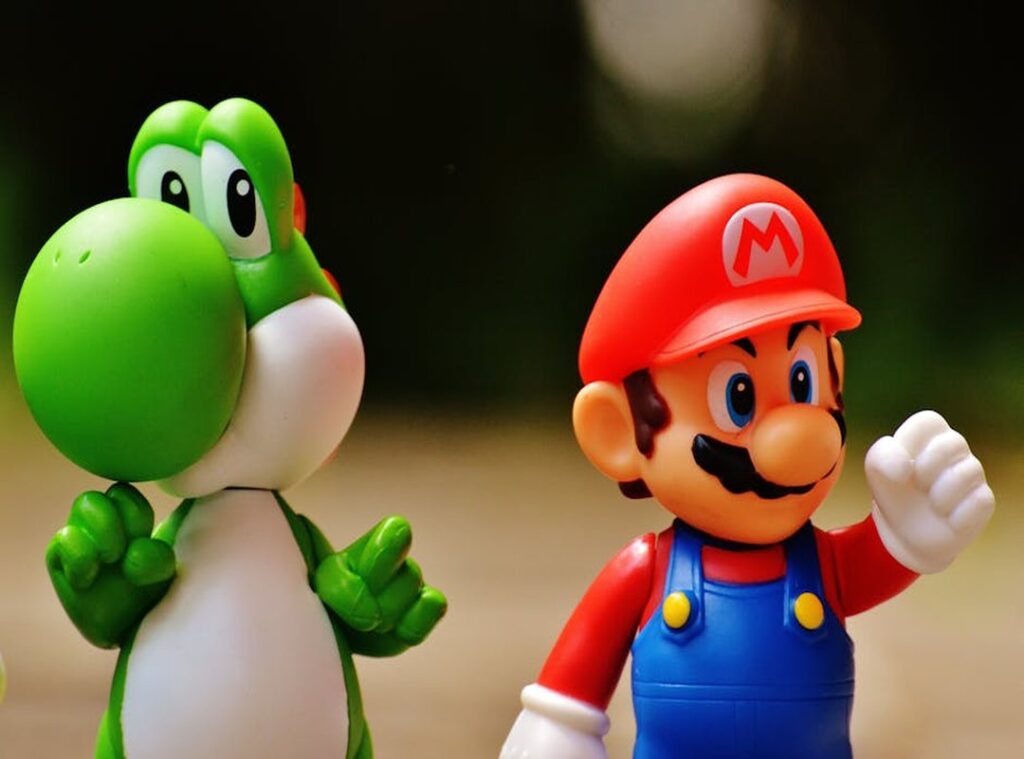
Super Mario is everywhere. You know him, but have you ever wondered how one character became such a global icon?
This article dives into the Super Mario Bros history and traces the unforgettable journey of the franchise. It’s not just about knowing Mario; it’s about understanding the detailed evolution, design philosophies, and industry moments that shaped his legacy.
I’ve spent years combing through gaming archives and observing trends. I’m bringing you takeaways that go beyond the usual surface-level facts.
Mario didn’t just redefine gaming; he changed how we interact with video games. You’ll see how accessible gameplay, new design, and lively worlds contribute to his lasting appeal.
By the end, you’ll gain a deep understanding of Mario’s ongoing cultural and technological impact. Get ready to appreciate not just the character, but the entire universe he represents.
From Jumpman to Super Mario Bros.: The Evolution
Let’s talk about where it all began. In 1981, Mario was just “Jumpman,” a carpenter trying to save Pauline from a giant ape in Donkey Kong. Who would’ve thought that this little guy with a basic role would become a global icon?
Shigeru Miyamoto, the mastermind behind Mario, made some genius design choices. The constraints? Limited graphics.
The result? A mustache to show his face and overalls to highlight arm movement. Smart, right?
By 1983, Mario had a career change. No longer a carpenter, he was now a plumber. And Mario wasn’t alone anymore.
His brother Luigi debuted alongside him in the arcade game Mario Bros. The genius of this game wasn’t just in the character design but in its new co-op mechanics. You and a friend could team up, fight enemies, and argue about who was hogging the power-ups.
This laid the foundation for future multiplayer games.
The arcade era was a breeding ground for creativity. Games like Mario Bros. set the tone for character traits and gameplay loops that defined Super Mario Bros history. Ever wonder why these early games were so addictive?
They nailed character appeal and gameplay balance, creating a timeless gaming experience.
The NES Revolution: Super Mario Bros. and the Rise of a Legend
In 1985, Super Mario Bros. hit the NES and changed everything. It was a game-changer, literally. Before Mario, the video game industry was in shambles after the 1983 crash.
But then this side-scrolling masterpiece emerged, with its colorful worlds and catchy tunes.
People were enthralled by its intuitive controls and escalating challenges. The design was simple but genius. Each level felt like a world of its own, filled with hidden secrets and those iconic power-ups like the Super Mushroom and Fire Flower.
Remember the thrill of grabbing a Starman? Invincibility at its finest.
This game practically saved home console gaming in North America. It’s a fact: without Mario, who knows where the gaming world would be today? It set a benchmark for future games with its tight mechanics and engaging design.
And let’s not forget its sequels. Super Mario Bros. 2 in the U.S. brought unique mechanics (love it or hate it), while Super Mario Bros. 3 introduced the world map and the Tanooki Suit. Talk about expanding the 2D platformer genre.
Want to dive deeper into how systems like the NES and others laid the groundwork for modern gaming? Check out the atari legacy modern influence. It’s fascinating stuff.
Super Mario Bros. history isn’t just about a game; it’s about a revolution that redefined an entire industry.
The 3D Leap: Mario’s Dimension Redefined
Super Mario 64 changed everything. This isn’t just nostalgia talking. When Nintendo released it in 1996, the game shattered expectations.
Mario jumped from the flat 2D space we loved into a lively 3D world. It wasn’t just a graphic upgrade. It was a revolution in game design.
The real magic? The camera. For the first time, players could control the view, giving them freedom to explore.
It was new (no hyperbole here). The analog stick added precision, making Mario’s movement feel natural. It set the stage for every 3D platformer that followed.
Let’s talk gameplay. The open-world levels were unlike anything before. Players weren’t just running from side to side.
Instead, they explored every nook, discovering secrets. Remember the wing cap? Such innovations encouraged creativity and exploration.
Miyamoto’s team faced challenges: translating Mario’s jumps and stomps into 3D wasn’t simple. Wall jumps required precision and timing, and the changing objectives kept things fresh. Later games like Super Mario Sunshine and its FLUDD mechanic continued this trend of innovation.
For those curious about Mario’s journey through gaming history, it’s worth taking a look at the super mario bros history. Decades later, Super Mario 64 still defines 3D gaming.
Innovation and Evolution: Cosmic to Global
Remember when Super Mario Galaxy hit the Wii? It was like nothing we’d seen before. The spherical level design and gravity mechanics changed everything.
You’d jump off a planet and land on another, never quite sure where you’d end up. And the orchestral soundtrack? Absolutely epic. It pushed the boundaries of what we could expect from Mario games, no question.
Then, there’s the New Super Mario Bros. series. A return to 2D platforming that brought back memories for old fans while welcoming new ones. Multiplayer made it accessible and chaotic in the best way.
You’d think it was all nostalgia, but it was more than that. It was about making the past relevant again.
Fast forward to Super Mario Odyssey on the Switch. Talk about freedom! The sandbox-like design and Cappy mechanic let you explore diverse kingdoms at your own pace.
Whether you’re capturing a T-Rex or just roaming around New Donk City, there’s a sense of discovery that’s hard to match.
These titles show Nintendo’s knack for keeping the franchise fresh. They’re not just sticking to tradition; they’re evolving it. This is what makes the Super Mario Bros history so fascinating.
It’s a constant balancing act between innovation and nostalgia.
Mario’s World: Beyond Pipes and Platforms
Let’s face it. Super Mario isn’t just about stomping Goombas anymore. The spin-offs have taken on a life of their own, creating a universe that’s both vast and varied.
Take Super Mario Kart. It didn’t just dabble in kart racing; it practically invented the genre. It’s no wonder it’s still pulling new players in today.
Then there’s Mario Party. Ever played it with friends? You know how it can turn a quiet night into a full-blown competition.
It changed digital board games forever (and friendships, too).
And don’t get me started on the RPGs. The storytelling in Super Mario RPG and the Paper Mario series is deep and engaging. You wouldn’t expect it from a game starring a plumber, right?
Yet, here we are.
We also can’t overlook games like Mario Tennis and Dr. Mario. They show Mario’s versatility and appeal across genres.
All these spin-offs have broadened Mario’s reach. He’s more than just a platforming star now. He’s a cultural icon, standing tall in Resurgence Retro Consoles Old New.
Mario’s Impact on Gaming Today
I’ve taken you through the Super Mario Bros history. We explored how Mario shaped the gaming world, filling in gaps in understanding.
This perspective matters. It shows a clear path of innovation and risk-taking that defines Nintendo. Mario isn’t just a character; he’s proof of what imaginative design can achieve.
Now it’s your turn. Dive back into a classic Mario game or try a spin-off you’ve missed. Each title offers something new.
Rediscover the magic and see how it continues to influence gaming today. Don’t just read about it (experience) it. Let’s keep this journey alive.