The world of gaming is vast, but few stories are as captivating as Atari history. If you’re curious about how this brand shaped the industry, you’re in the right place.
I remember playing those classic games, and I know I’m not alone. Atari isn’t just nostalgia; it’s a big part of gaming’s evolution. You might be wondering how a company from the 70s still impacts gaming today.
This article dives deep into the ups and downs of Atari. From the launch of the Atari 2600 to the rise of arcade culture, I’ll cover it all.
You’ll see how Atari faced fierce competition and how it adapted to changing times. This isn’t just a recount of dates and facts; it’s an exploration of innovation and resilience.
By the end, you’ll understand why Atari still matters. Trust me, this isn’t just history; it’s a lesson in gaming’s heartbeat.
The Genesis of a Gaming Giant: From Syzygy to Atari
When you think of Atari history, it starts with Nolan Bushnell and Ted Dabney. These two visionaries kicked off their journey with Syzygy Engineering. Weird name, right?
But it got the ball rolling. Their first creation, “Computer Space,” came out in 1971. It was the world’s first commercially sold arcade video game.
Let’s be honest, though (it) wasn’t an instant hit. The game was new, sure, but it was also complex. Too complex for the average Joe.
And that’s a problem when you’re trying to sell fun.
Then came 1972, the year Atari was officially born. Why “Atari”? It’s a term from the game Go, meaning a strategic advantage.
Clever, huh? The vision was clear: make games that were easy to play but hard to master. Enter “Pong.” This was a game changer (literally).
Simple, addictive, and downright fun. It didn’t take long for “Pong” to light up arcades everywhere. Suddenly, everyone wanted a piece of the action.
Here’s where things got wild. “Pong” sparked a frenzy, leading to a flood of imitators. Atari had to expand quickly to keep up with demand. They were riding the wave of what we now call the Golden Era Arcade Games Journey.
But let’s face it, without “Pong,” who knows if arcades would have ever become a thing? This was a big moment in gaming history. And it all started with two guys and a crazy idea.
Atari’s Golden Age: Arcade Titans and Home Console Heroes
Atari’s rise to fame was no accident. The games “Tank,” “Breakout,” and “Asteroids” were not just fun; they were new. Each had unique mechanics that kept players hooked (and dropping quarters) for hours.
These weren’t just games; they were cultural phenomena that defined an era. Ever wonder why these games still evoke nostalgia? It’s because they set the standard for what arcade games could be.
When Warner Communications acquired Atari in 1976, it wasn’t just a business move. It was a strategic play. Warner brought in capital and business savvy, and suddenly Atari had the backing to innovate on an even bigger scale.
Then came the Atari Video Computer System (VCS) in 1977, later known as the Atari 2600. At first, it struggled. Confusing interfaces and a lack of killer apps didn’t help.
It’s like watching a band go from garage gigs to stadium tours overnight.
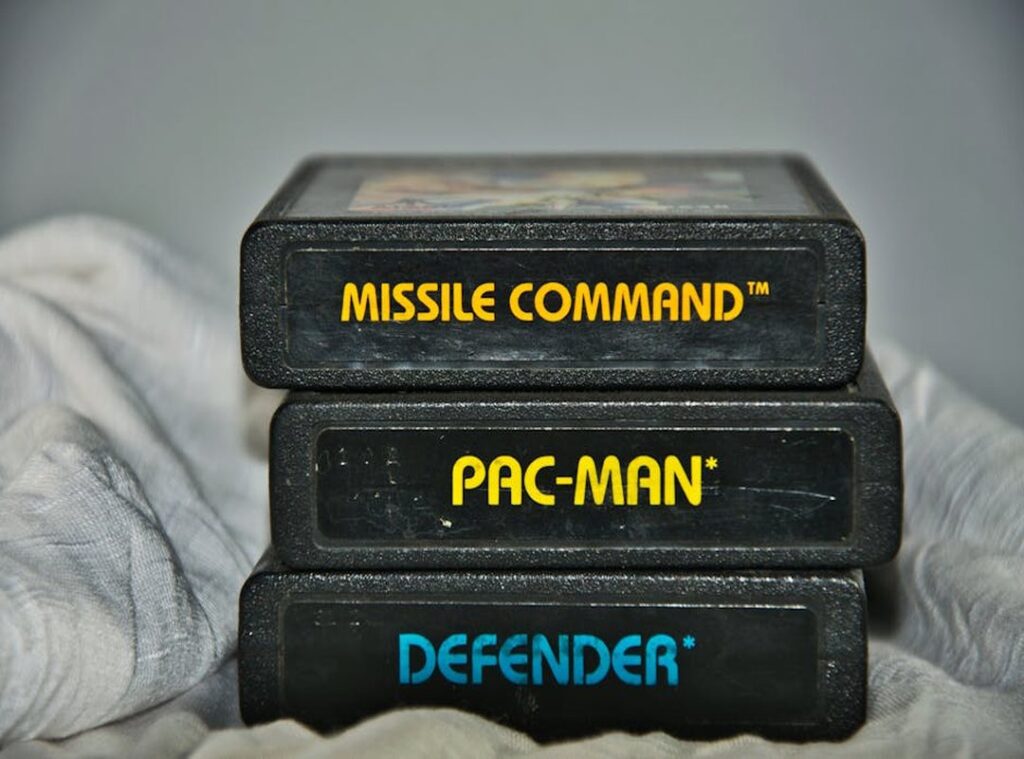
But then, boom. Cartridge-based gaming changed everything. Suddenly, you could swap games like changing records on a turntable. “Space Invaders,” “Pac-Man,” and “Pitfall!” turned things around and made the Atari 2600 a household name.
These games weren’t just hits; they were cultural touchstones. “Space Invaders” alone doubled sales. “Pac-Man” became a global icon. For a deep dive into this atari history, check out the timeline of events that shaped not just a company but an entire industry.
Atari didn’t just make games. It created legends. So, what made Atari such a titan in gaming history?
Simple. They dared to innovate.
The Looming Shadow: Atari and the Video Game Crash of 1983
I remember the chaos like it was yesterday. Atari, once the giant of gaming, stumbled hard in 1983. The market was flooded with too many consoles and low-quality games.
Everyone and their dog seemed to be making a console or a game. But Atari’s missteps were legendary.
Let’s talk about Pac-Man. The Atari 2600 version was a disaster. Poor graphics and gameplay that didn’t match the arcade hit.
It was overhyped and underdelivered. Then there was “E.T. the Extra-Terrestrial.” Rushed development led to a key flop. Sure, the story about Atari burying millions of unsold cartridges in a landfill is a legend, but it’s a legend for a reason.
It symbolizes their failure.
Atari history took a nosedive, not just because of these games. The rise of personal computers shifted consumer interest. People wanted more than just games.
They wanted versatility. Atari just couldn’t keep up.
The aftermath was brutal. Financial losses were staggering, and Atari’s reputation was in tatters. Their failure wasn’t just about bad games.
It was about failing to see the bigger picture. They didn’t adapt, and they paid the price. The crash reshaped the industry, and Atari was left picking up the pieces.
Post-Crash Metamorphosis: Divisions, Decline, and New Directions
Atari’s history is a rollercoaster, isn’t it? Back in ’84, Warner Communications decided to shake things up. They sold Atari’s home computing and console division to Jack Tramiel.

This guy used to run Commodore, and he formed Atari Corporation. Smart move or risky bet?
The arcade division, though, kept its identity as Atari Games. It eventually found a new home under Namco and later Midway Games. Imagine the shifts those employees went through!
Atari Corp. tried to breathe life back into the brand with products like the Atari ST computers and the Atari Lynx handheld console. The results? Mixed at best.
The competition was fierce, especially with Nintendo and Sega dominating the scene. Speaking of Sega, their Sega Sonic Revolution was a real game-changer.
By the late ’80s and early ’90s, Atari faced an uphill battle. They struggled to stand out, and by 1996, JTS Corporation swallowed them up. Was it the end of an era?
Absolutely. Atari’s run as a gaming powerhouse was effectively over. But hey, in the world of gaming, nothing stays the same for long.
The Enduring Echo: Atari’s Legacy and Modern Reinterpretations
When I think about the roots of the video game industry, one name stands out: Atari. This isn’t just nostalgia talking. Atari’s influence is deep.
It practically invented arcade gaming and home consoles. Remember Pong? That was Atari, turning living rooms into gaming arenas.
Atari didn’t just make games; it created a culture. It laid the groundwork for future consoles and developers. The way Atari marketed games was a game-changer (pun intended).
It made video games mainstream, turning them into pop culture icons.
But the Atari name has morphed over the years. It’s been rebranded, bought, and sold like a vintage car. Today, it’s more of a brand licensing entity.
Modern attempts to revive it, like the Atari VCS console, try to tap into this nostalgia. Even blockchain initiatives show how Atari history is evolving to fit today’s market. But do these efforts capture the original magic?
That’s the million-dollar question.
Atari’s Impact on Gaming Today
Your quest for a clear understanding of Atari history has been fulfilled. This deep dive into Atari’s past lays the groundwork for grasping modern gaming. So why stop here?
Dive deeper into retro gaming and explore the innovations that shaped the industry. Your journey is just beginning.